
Birth of the Acid Western
A forgotten archive. A lost film. A story reborn.
How an unexpected archive revealed a lost chapter of film history.
Birth of the Acid Western is a feature documentary and archival film project tracing the origins of the Acid Western through Orville “Bud” Wanzer’s 1965 film The Devil’s Mistress, the first feature made in New Mexico. Rooted in Las Cruces, the project explores regional filmmaking, counterculture, film history, and the politics of cinema made far from Hollywood.
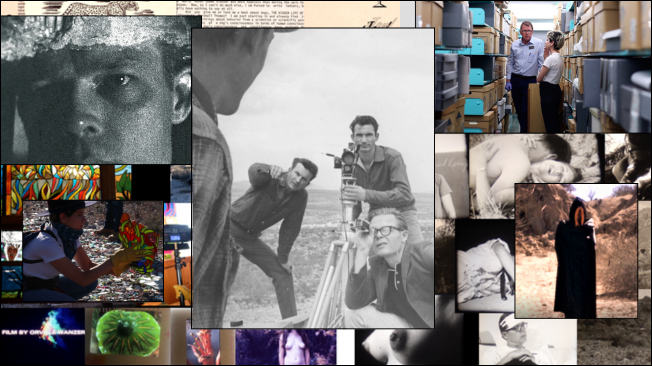
In late 2018, I had recently completed my Ph.D. in Literature, Theory, and Cultural Studies, and was teaching a course called Film as Art in the English Department at New Mexico State University — the same course Orville Wanzer had taught 60 years before me.
As a scholar working across film, literature, and gender studies, I’ve always been drawn to the unconventional — to the places where art pushes against the grain of tradition. Wanzer’s work embodied that same resistance: a refusal to fit neatly into categories, a reaching beyond the boundaries of genre and convention. In his archive, I recognized a story that wasn’t just historically significant but also personally urgent.

The Archive
144 reels, countless stories — a living history of the Southwest on film.
Over the past six years, I’ve worked to digitize nearly all of the 111 reels of 16mm films in Wanzer’s archive. What I uncovered was more than just Wanzer’s legendary The Devil’s Mistress (1965) — often considered one of the earliest examples of an “Acid Western.” The reels revealed fragments of his unfinished projects, outs from The Devil’s Mistress, student films spanning over two decades, and glimpses into the independent filmmaking spirit that was alive in the Southwest long before Hollywood took notice or film schools took root in New Mexico.
Wanzer’s archive is a living history of the region’s first film school, which he launched at NMSU in 1966. For twenty years, he nurtured students who experimented with film outside the mainstream, leaving behind an untold story of cultural rebellion, desert landscapes, and visionary art.

The Legacy
When the Western collided with counterculture, a new vision was born.
What began as an academic curiosity has grown into a full-scale documentary project: Birth of the Acid Western. The film explores the legacy of Wanzer and the strange, visionary subgenre he tapped into — a genre where the Western myth collides with countercultural visions, surreal storytelling, and the spirit of rebellion.
Rare Archival Footage – Films digitized for the first time from Wanzer’s collection.
Interviews and Testimonies – Scholars, artists, and those who knew Wanzer help piece together his legacy.
Cinematic Storytelling – The landscapes of the Southwest become a backdrop for a story about death, failure, loss, and what Wanzer descibed as, “the strange influence that some people have over others.”
This isn’t just a film about the past — it’s about how forgotten archives can reframe our understanding of art, history, and the American frontier.
Where We Are Now
The film is currently in post-production, with Deadeye Post in Santa Fe building out the first public cut. A new trailer has just been completed, and the journey toward the premiere is underway. With community support, we’re raising the resources needed to finish the edit, create an original score, and bring Birth of the Acid Western to audiences for the very first time. To add your support, click here.
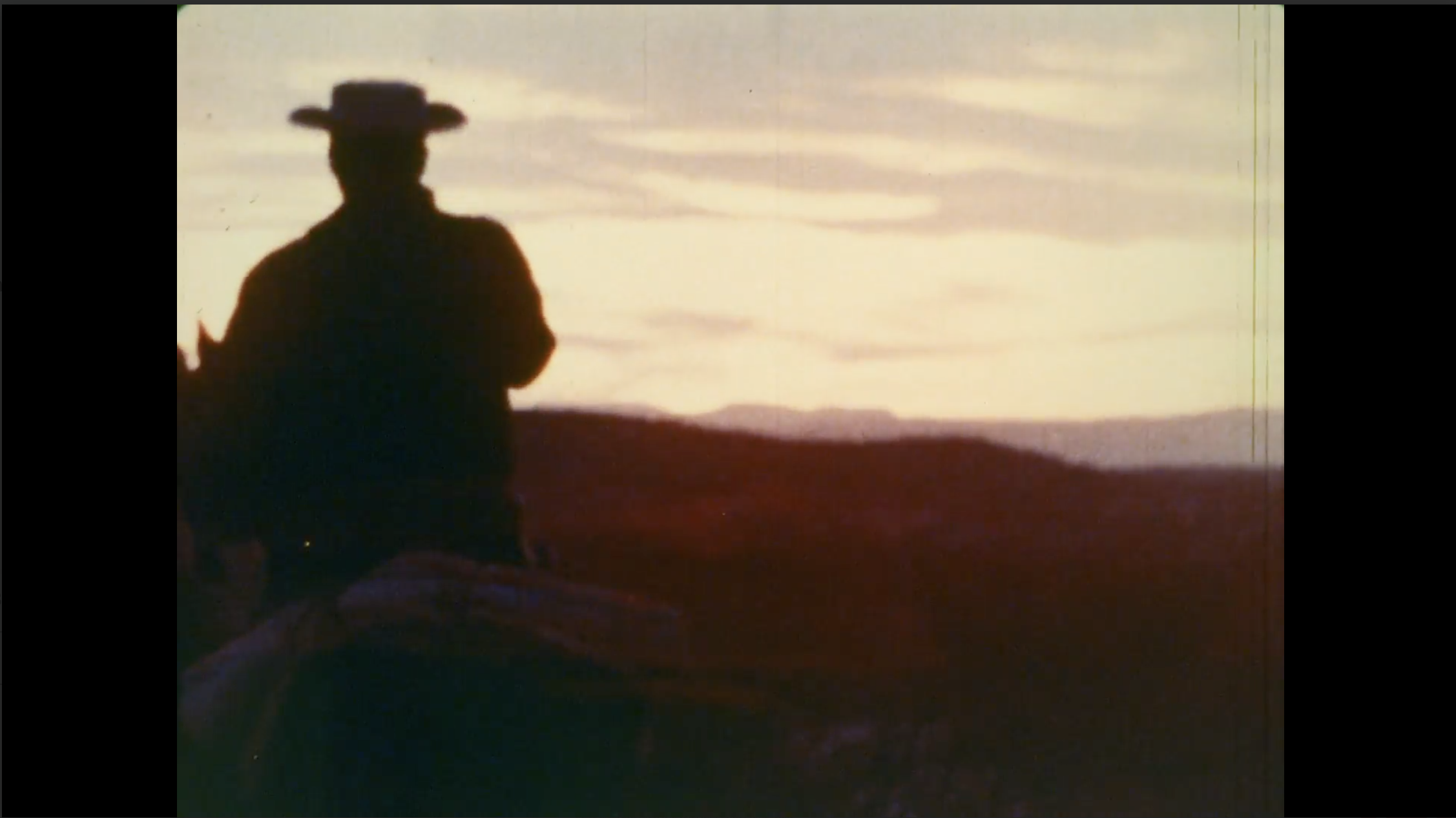
Screen still from The Devil’s Mistress
About the Director

Julia L. Smith is a filmmaker and cultural historian whose work explores cinema, archives, and public memory. She is the director of Birth of the Acid Western, a feature documentary that excavates the forgotten film history of New Mexico through the rediscovery of The Devil’s Mistress (1965), one of the earliest independent feature films made in the state.
Smith’s work sits at the intersection of film history, cultural studies, and archival research, with a particular focus on regional filmmaking, countercultural cinema, and questions of gender, power, and artistic marginality. Trained in critical theory and film studies, she brings a research-driven approach to filmmaking that is grounded in visual analysis, historical recovery, and community engagement.
Birth of the Acid Western began not as a conventional documentary project, but as an archival discovery. While conducting research at New Mexico State University, Smith encountered the largely unexamined films and papers of filmmaker Orville “Bud” Wanzer. What emerged was a body of work that challenged dominant narratives of American cinema—suggesting that aesthetic experimentation and countercultural impulses were taking shape far from Hollywood well before the Acid Western had a name.
Rather than confining this history to the archive, Smith developed the project as a public-facing endeavor. The film has grown through community screenings, curated programs, lectures, and partnerships with libraries, theaters, and cultural organizations across New Mexico. This process—moving between scholarship, filmmaking, and public programming—forms the core of Smith’s directorial practice.
In addition to her work as a filmmaker, Smith has taught film and media studies, gender and sexuality studies, and critical theory at the university level, and has served as a curator and programmer for film festivals and independent cinemas. She is also the founder of a long-running community cult cinema series, dedicated to creating accessible, context-rich film experiences outside traditional academic and commercial spaces.
Birth of the Acid Western reflects Smith’s ongoing commitment to reclaiming overlooked cultural histories and reimagining how film scholarship can live beyond the classroom—through cinema, conversation, and collective discovery.